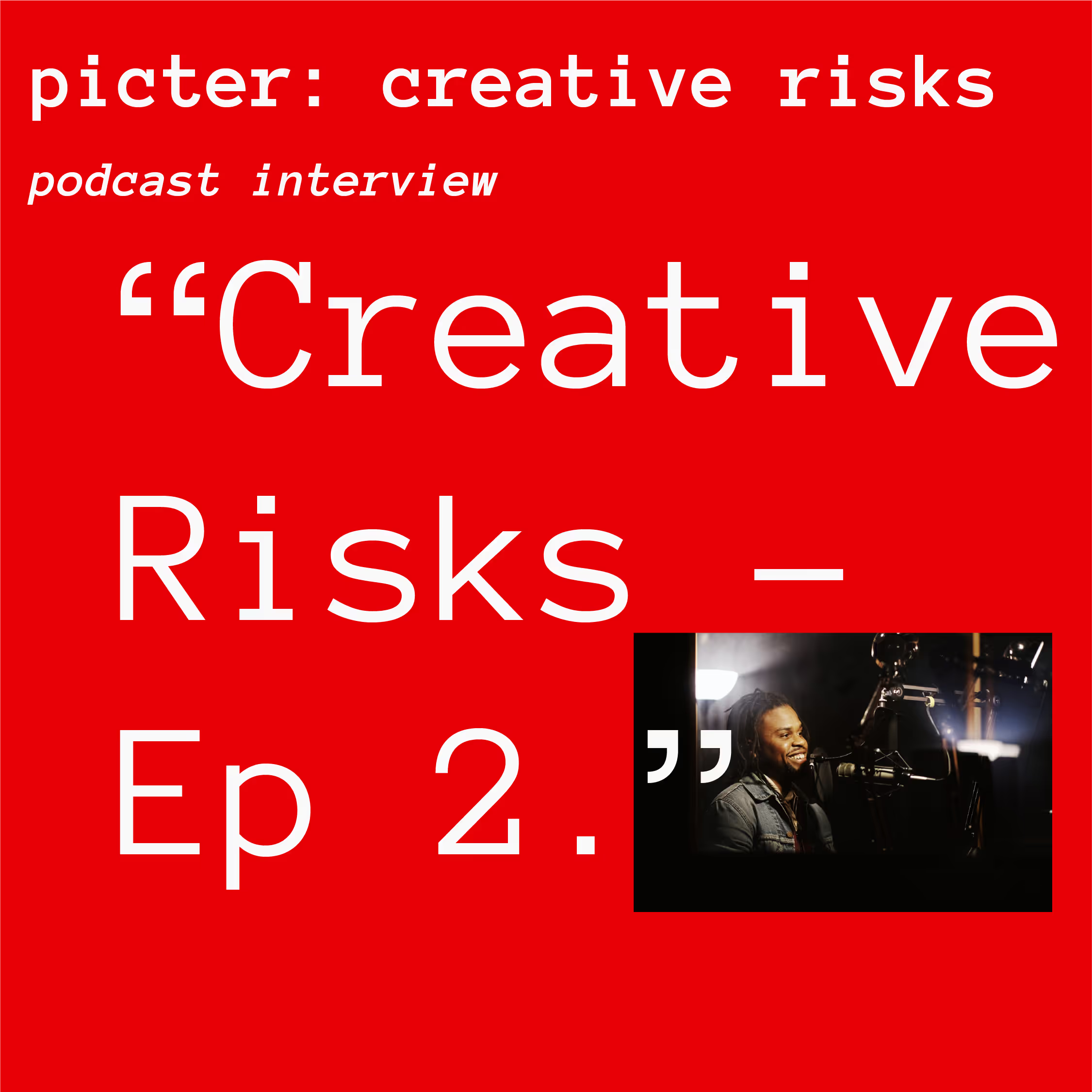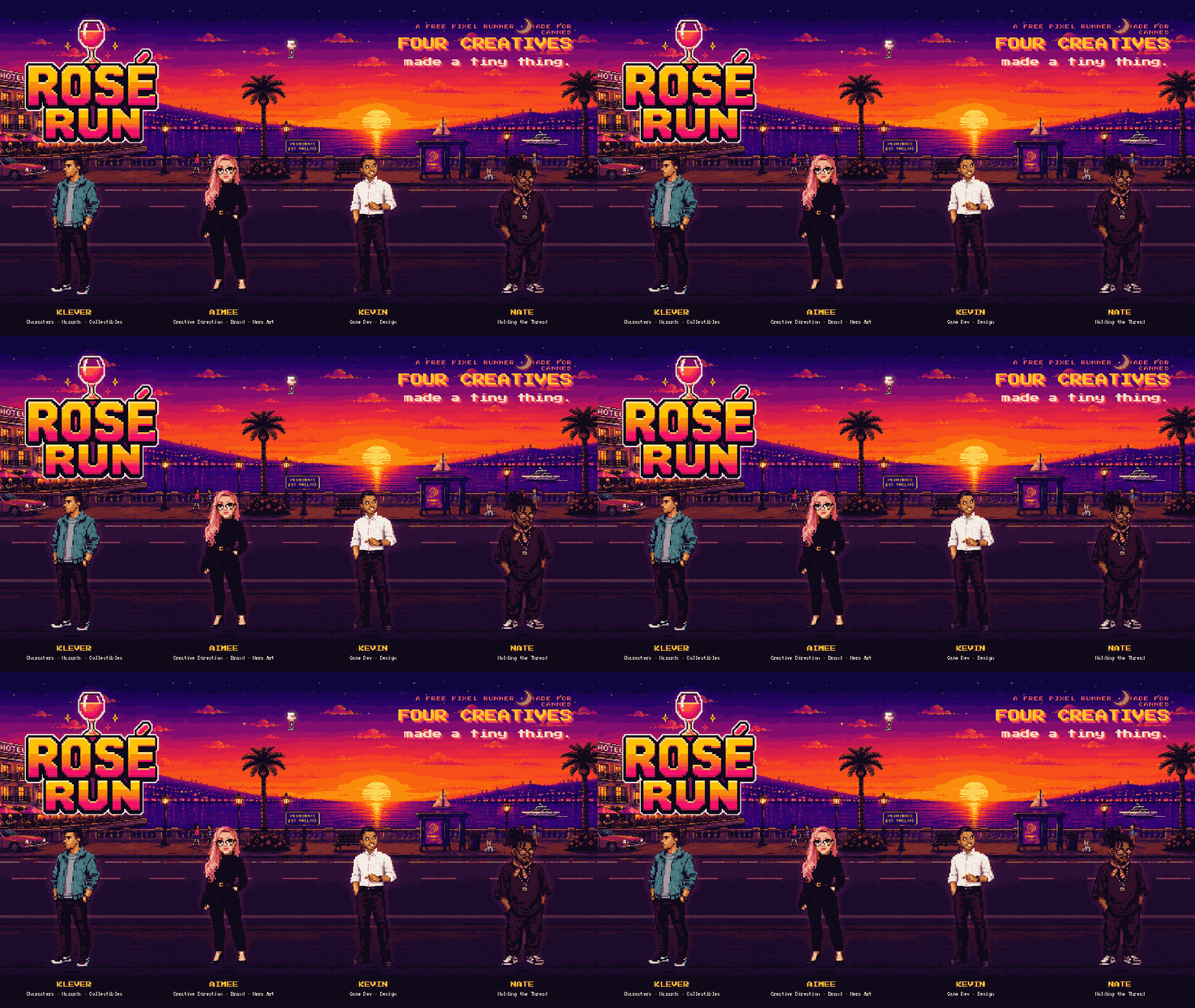
Kevin had just handed Nate the Rosé Run codebase. The build was done. Aimee, Klever, and Nate were taking it the rest of the way to launch, finishing the brand, the characters, the hazards, the polish. They sat down for tacos in Brooklyn to catch up and ended up talking about creepy ghosts, the AI slop, octopus businesses, Yoko reading markdown files, and what it means to make a tiny thing for your friends. This is a lightly edited transcript.
1. Are we in brunch?
KEVIN: There's a brunch menu? Are we in brunch?
NATE: Yeah, we are in brunch. They have tacos though. There was a spot below my first studio apartment in Philly called Taco Riendo. Hole in the wall. It just was the energy.
KEVIN: I think you took me there.
NATE: I think so too, dude.
KEVIN: What'd you have for breakfast?
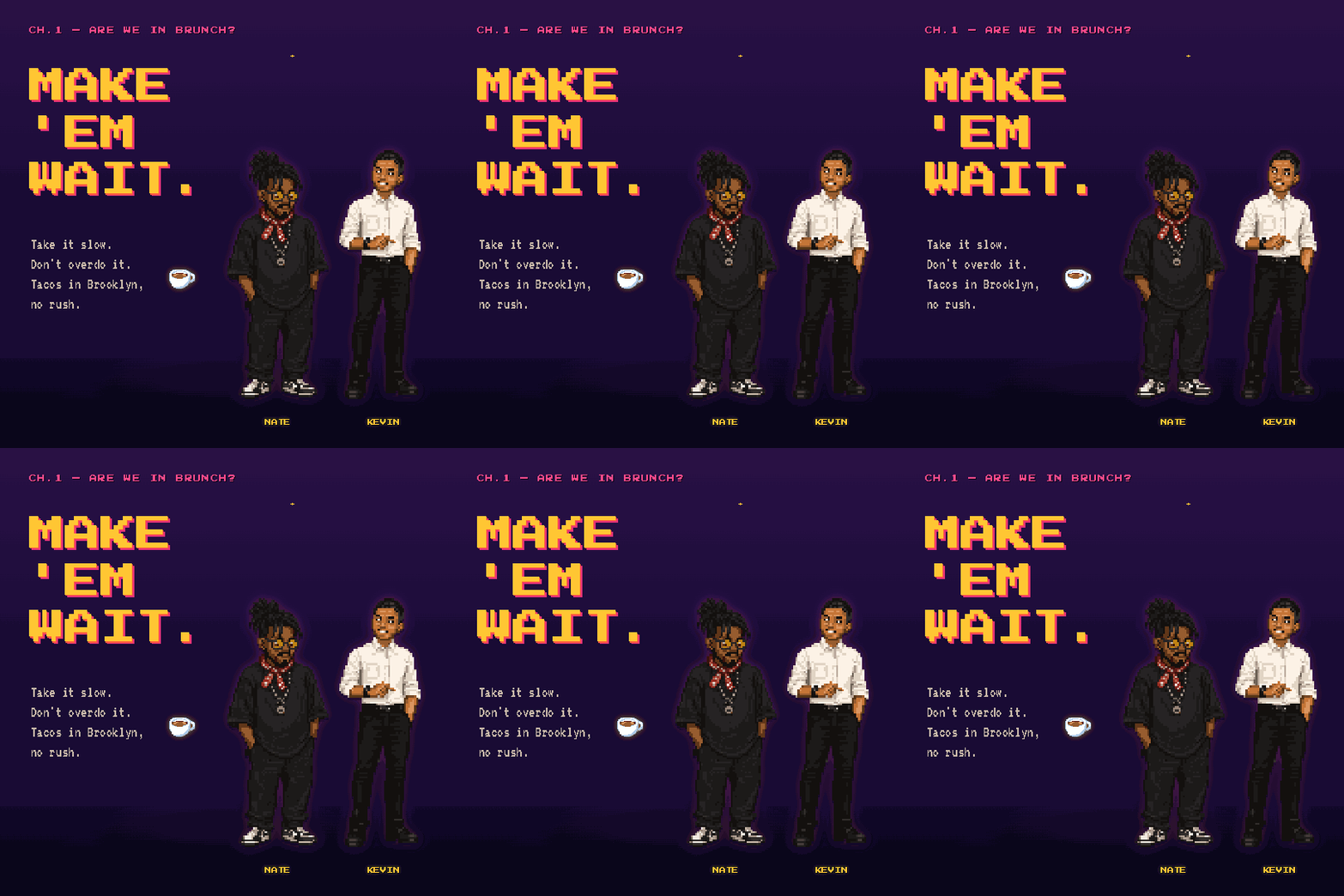
NATE: Just a smoothie. Felt like my morning was gonna be rushed, but it was super chill. So if it feels like it's gonna be a rush, I just take it slow and not try to overdo anything. Like, make 'em wait.
2. The last two weeks
KEVIN: How have you been these last two weeks since I last saw you?
NATE: Cool. After seeing you, I was in France, kicked off this project, and that's been really fun. A fun thing to just play in. Like a playground. I'm not gonna do cold outreach. I'm just gonna work on something that's actually impactful and enjoyable. Working with you, talking with you on it, Klever helping unlock his pixel process, Aimee on the brand. And then some interesting projects circled back. Nike Jordan from a Super Bowl activation. We did a microsite, I expanded it into a two-page experience, took our whole capabilities deck and turned it into that. I'm just like, "Let's run it up."
KEVIN: Are you seeing other agencies push into creating software like you are?
NATE: Not in this way quite yet. I'm in a group of agency operators, different scales. Last session the mood was heavy. A lot of folks feeling the weight of the moment. And I'm just like, "I'm having fun." There were two other dudes on that call playing in AI. One had built a whole PM system for his organization. I'm like, "He found the wave." Surf's up, bro.
3. I'm on the cusp of an unlock
NATE: How have your few weeks been?
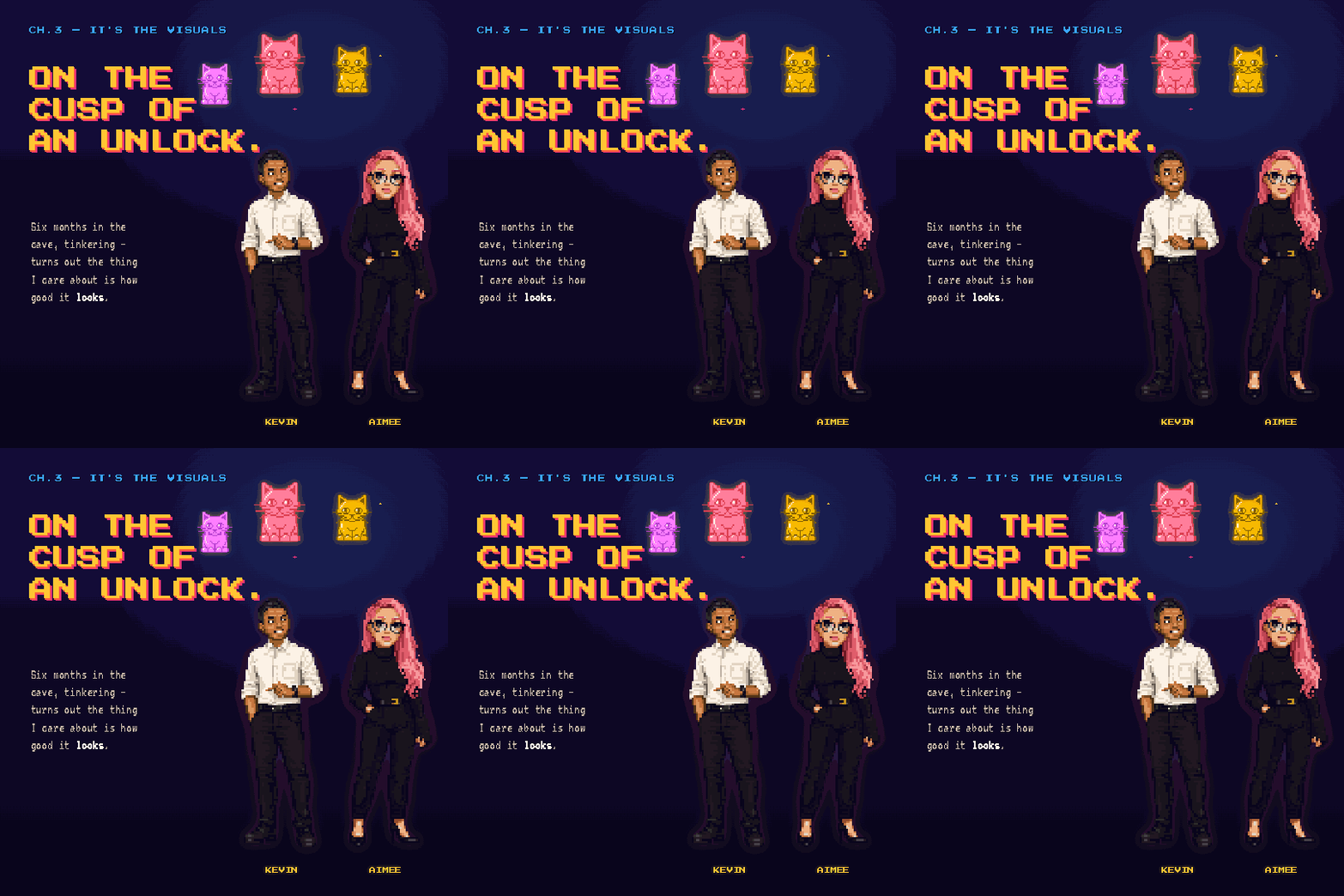
KEVIN: Creatively I feel like I'm on the cusp of something. It's a little bit hand-wavy. I've had six months to just go tinker and make things with software. It's felt a little bit like I'm doing this in my cave because I want to. I've decided to just do this thing for me and learn. And then through that process I learned more about what I actually care about. And funny enough, it's actually the visuals. I was making some projects that were usable, but I wasn't excited to share. And I was like, "Is it because I'm worried not many people will use it?" After some investigation, I actually don't think that was it. It's just, it doesn't look as good as I want it to. I haven't been, like, a designer or someone in the creative field professionally ever. So I'm learning more about what is my taste. And what is the gap between my taste and what I'm seeing? I spent another couple weeks just doing that. My little fitness tracker, StrongFrond. I thought, "I don't like how the character looks." So I talked to Claude about references, and I ended up drawing something myself in Figma. It isn't all AI generated, but it's a more smooth process. And I got to this creepy ghost thing. I was like, "Oh shit, I like this a lot."
NATE: I fuck with the creepy ghost.
KEVIN: Of course I want people to use stuff that I make. But my real bar is just, go ship a thing I'm proud of.
4. What do you want to use all that for?
KEVIN: I had a call with Kai today, and he made me realize something I'm grateful for. If I was still working a full-time job right now, I'd be pouring all of my AI energy and literal compute into doing that corporate job better. "How do I get this to write all my Slack messages? How do I get this to do compliance work more effectively?" I bet I would find some of that interesting. But instead I'm spending all of that on, how do I make stuff that feels like it really expresses me?
NATE: Real annoying, the force-them-to-read-this-for-you energy. The AI slop is everywhere. It's in the memos. It's in the emails.
KEVIN: It's a good question around what do you want to use all that for? Already, like, especially when you work in a company, that system has incentives that push us to do things for a certain purpose. Aka, go produce things so certain people can make more money. And that doesn't have your expression or your wellbeing at the forefront.
NATE: Even with AI, you know what we're doing. We're still shaking our ass for capitalism. But I do believe there's still space for reconciling our ass-shaking and the climate challenges with better choices.
5. It's still systems. We just lead with joy.
NATE: Our operations director Danielle is on her way to becoming a B Corp. She has very high integrity around climate change, and she was averse to all this because of the climate implications. When I first did my first microsite, I was like, "I'm gonna watch this four-hour YouTube video on how to use Claude Code." She was like, "Nate, that's not how we get ROI here. Your company isn't healthy, and it's my fiduciary responsibility to express that." I was like, "You right." So I watched it thirty minutes at a time. And then I showed her the microsite, and she was like, "Whoa." Now we have these weekly AI labs for her and I. She's a fucking certified CPA. She can't fuck around with people's financials. She's challenging me to be like, "Do you need to build a response? Or can you just use Xero, Nate, that we are already paying for?" And I'm like, "Thank you." Because you use it every day and I do not. So I need to understand your experience to build something that's functional for both of us. It's a really fun time to be challenged in that way. The fragmentation of people's understanding is starting to decrease, which creates opportunities for education, and how to throttle your access to it and your intention with it.
5.5 A card I made when I was little
KEVIN: What motivates you to do all this? Is it basically creative expression?
NATE: A hundred percent. Even as a kid I can go back to my origin story. I made a card for someone I love. Construction paper, glitter, glue. Elementary school style, third grade, going crazy. I'd always made art as a child, but I gave it to someone and they threw it away. And that broke my heart. That heartbreak has always been the response in me: don't let anyone diminish your expression. And continue to make. There's a lot of people who make things who don't have supportive communities. So make sure you support people who also have expression, in a compassionate way, so they can identify with their expression more thoroughly. A little bit of that foster care kid abandonment shit mixed with, I was an art kid. Never knew where to put a comma. As soon as I heard about art school, I was like, "Yeah, where do I subscribe?"
6. Pop-up software
KEVIN: I was talking to Yoko about the Rosé Run project. And I used this phrase, pop-up software.
NATE: I like it.
KEVIN: It's sort of like a version of pop-up software. We're trying to make this really cool game that makes sense at this festival during this time. And it's built with that purpose in mind. Maybe Palette Group's gonna go build more pop-up software. They do this experiential work. Like, before, you'd be like, "Am I gonna spend 100, 200,000 dollars and hire an agency to go build a thing?" No. Cool software to go pair with a real-life thing is even more accessible to make right now. Though I don't know how many people are really pushing on that yet.
NATE: My belief is the future of entrepreneurship has to be multiple streams of income. Because everything's gonna get so fragmented. Everyone's just gonna be really good at everything. You just need to be able to drive or create systems for many things that aren't high lift. Maybe medium in revenue. Not every company's gonna be ten million in revenue. But if you have two or three, a million, two million, half a million, quarter of a million different revenue streams a year, that are like, "Mm, this agent's doing this. This person's handling that." There's a salary for this person to provide oversight. I'm coming in tweaking shit here. Just managing and tinkering these small businesses.
KEVIN: I've been like, "Oh, I wonder if there's a model where I have five or six weird little life-tracking app games." Pay for the Over Easy worldwide package. Twelve bucks a month or whatever it is. Who knows if it's everything or small, but, oh, that sounds not bad. Maybe I'll run an olive oil ranch or some shit. If someone tomorrow was just like, "Yo, I've got the start of a very successful boxing glove company," I'd be like, "Let's fucking go." There's software to make. There's brands to do. There's operations. There's legal. There's supply chains. Great.
7. Yoko reads
KEVIN: This is tangentially related, but Yoko reads. She literally reads documents. Which sounds basic, but today a lot of people send things they haven't read themselves. And we also make documents with AI that I, when I'm coding with compound engineering, I'm not reading all the plans. That stuff gets real long. And Yoko reads. She read something I had written for product. She was like, "Oh, I went in to look at that skill." And I was like, "Oh, I haven't really read that myself." She spent time with it.
NATE: Damn. You got a bad bitch reading markdown files. CMD saved your ass. That might be a job in the future. In production land you have a producer, then you have an assistant editor. The assistant editor's job is to receive the hard drive from the project and organize all the video content into the Premiere Pro or DaVinci. Wherever the senior editor will actually edit. Their responsibility is to assist-edit the work before the real editor does it. So what you're saying is, this person organizes it for you. That'll be the future too. Someone helping support your MD.
8. What did we need? Who'd we miss?
NATE: In my brain, I'm trying to figure out what the design of these teams looks like in the future. What are your notes on what kind of support you think you would've liked? Or did doing it yourself feel fine?
KEVIN: One thing I did that we hadn't really discussed was some product design work. There were various mock-ups that were made, and you kind of had this design system, but then at the end of the day, I had to go and decide, what is the right menu that makes sense for the user experience of this game? Maybe you would've gotten there if you just put your head on the same problem. But if you were assembling the team to do so, I'd be like, "Who has the product design chops?" Going to run through it and be like, "This is too many taps away. This doesn't feel right." That UX-flow mentality. If you had someone who was more purely technical, you would need someone to bring that product design perspective.
NATE: Makes me think about film production. There's a pre-production and then a production and then a post-production. So you've done pre-pro and production on MVP, and now we're post-production and we're fine-tuning shit and making the edits. Usually there's a post-production supervisor who takes over. That's the production designer who maintains the integrity of the UI/UX experience all the way across. Project manager would've been nice.
KEVIN: Project manager would've been nice. I have friends who for a while have identified as design engineers. They're like really good at design, but they're also pretty good engineers. They can build apps by themselves. I feel like right now there are a bunch of us, including me, who are trying to become amateur design engineers with the power of AI. And then I feel like those folks who already were design engineers are so powerful right now. They had enough of a broad understanding of how to make an app, and now all their cracks are filled because they have an AI with them. And then it comes down to, do you have interesting things to make?
NATE: The only craft now is being able to find actual challenges to solve for.

9. Anything you want to say to the peoples?
NATE: Anything you want to say to the peoples?
KEVIN: Appreciate you.
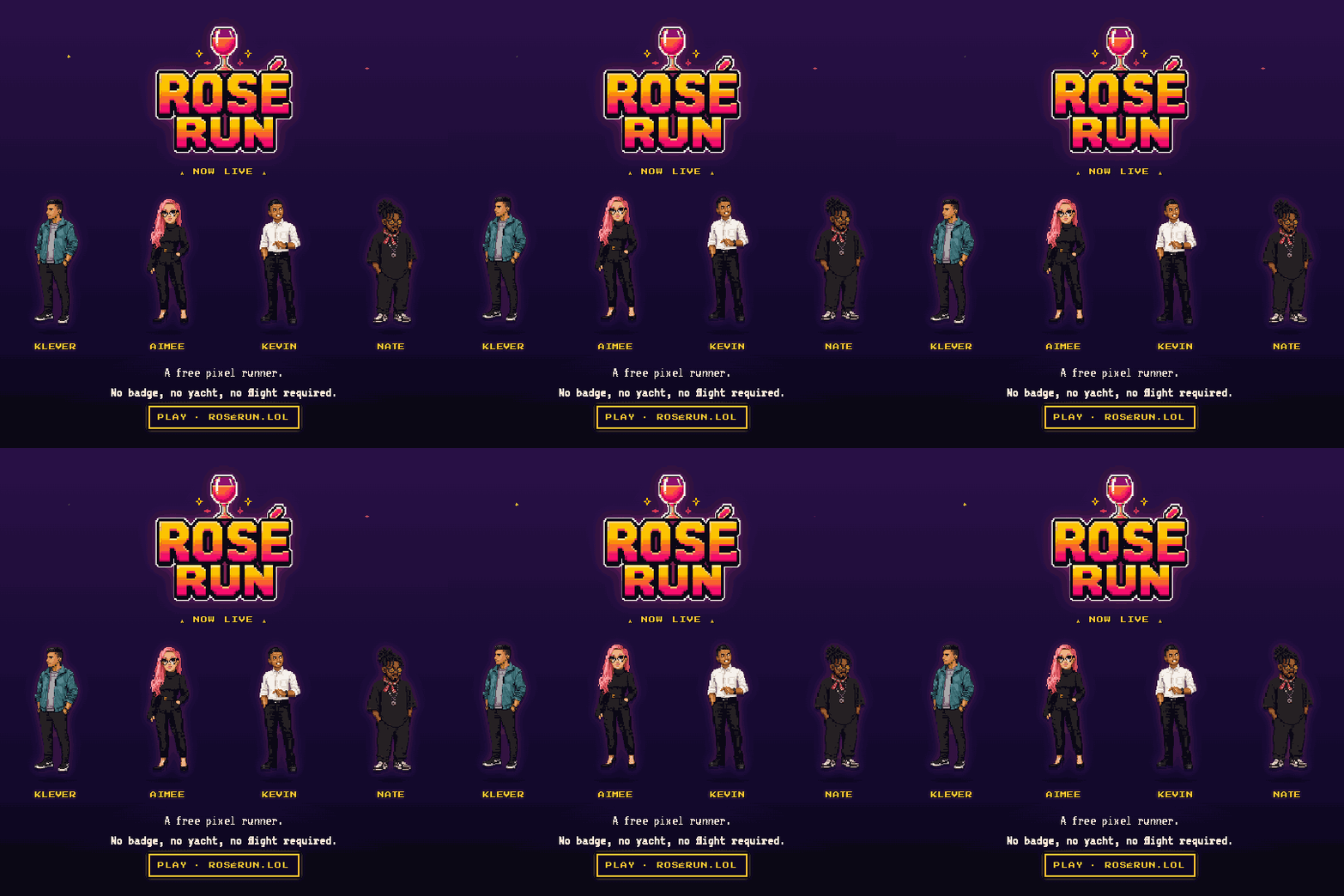
The game the four of us made together went live today. It's pop-up software. Built for this festival, during this time, with that purpose in mind. A free pixel-art runner you play right in your phone browser. No badge, no yacht, no flight required. Chase clout down the Croisette and run it up the Cannes Charts from anywhere. Play at rosérun.lol.
With gratitude
- Kevin: Game development & design. Handed off the codebase, the vibe-coding partner who built the thing with Nate from the ground up.
- Aimee Brodbeck: Creative Director. Brand, hero art, and the visual system that made this feel like a real Palette Group project instead of a side quest.
- Klever: Illustrator & Pixel Artist. Characters, hazards, and collectibles: every sprite you actually looked at while you were running.
- Nate Nichols: Creative direction, engineering, holding the thread.
From a voice note Nate recorded the night before launch: "I'll see you in Cannes. I'll be there with a handful of t-shirts."



-Cover.avif)